Aluminum storefront systems have become one of the most common framing solutions in commercial construction. From retail centers to office buildings and schools, aluminum framing provides the strength, flexibility, and clean appearance architects and contractors want.
But storefront systems today are evolving quickly. Modern aluminum storefront designs focus on lighter materials, better thermal performance, and cleaner architectural lines. These improvements help buildings perform better while still maintaining the sleek, modern look that many commercial projects demand.
For glazing contractors, general contractors, and building designers, understanding the direction of aluminum storefront systems helps ensure projects meet both current expectations and future performance standards.
Why Aluminum Storefront Systems Remain the Industry Standard
Aluminum has been used in storefront framing for decades because it offers a strong balance of durability, weight, and cost. Compared to steel or other materials, aluminum is lighter and easier to fabricate while still providing structural strength.
Several characteristics make aluminum storefront systems a preferred option in commercial construction:
- High strength-to-weight ratio
- Corrosion resistance
- Long service life
- Design flexibility
- Compatibility with many glass types
- Lower maintenance requirements
These benefits allow contractors to install storefront systems quickly while still delivering reliable long-term performance.
Lightweight Materials Make Installation Easier
One of the biggest advantages of aluminum storefront systems is their lightweight construction.
Aluminum frames weigh significantly less than steel framing systems. This reduces labor during installation and allows crews to move materials more easily around the jobsite.
For glazing contractors, this means:
- Faster installation timelines
- Lower labor strain
- Easier material handling
- Reduced structural load on buildings
Even though aluminum is lightweight, it still provides the strength needed to support large glass panels and storefront openings.
As building designs move toward larger glass walls and expansive entrances, lightweight framing systems become even more valuable.
Modern Storefront Systems Support Larger Glass Panels
Architectural design trends continue to move toward open, glass-heavy facades. Retail stores, restaurants, and commercial buildings want natural light and strong visual connection between interior and exterior spaces.
Aluminum storefront systems make this possible.
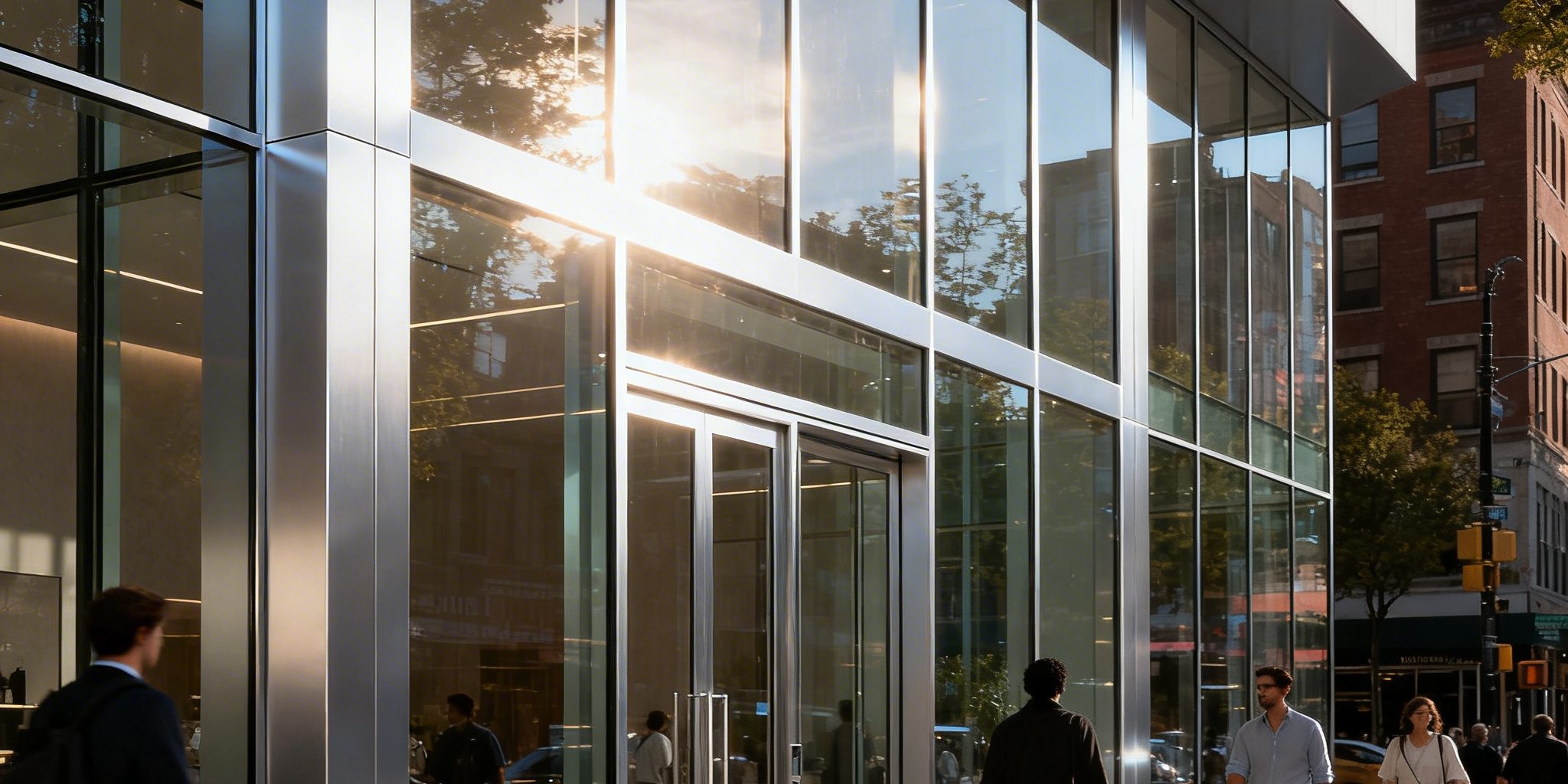
Modern framing systems allow for larger glass panels while still maintaining structural integrity. Slim sightlines and stronger aluminum alloys allow storefronts to hold wide glass sections without bulky frames.
Benefits of larger glass storefront panels include:
- Increased natural lighting
- Better customer visibility for retail spaces
- A modern architectural appearance
- Improved building aesthetics
Because aluminum framing can support a wide range of glass types, including laminated, tempered, and insulated glass units (IG units), designers have more flexibility when planning storefront layouts.
Energy Efficiency Is Driving New Storefront Designs
Energy performance has become a major focus in modern construction. Building owners want systems that reduce heating and cooling costs while maintaining comfortable interior spaces.
Aluminum storefront systems have adapted to meet these needs.
Thermal break technology is now widely used in commercial aluminum framing systems. A thermal break separates the interior and exterior metal surfaces with a non-conductive material, reducing heat transfer through the frame.
This helps improve:
- Interior comfort levels
- Energy efficiency
- Condensation resistance
- Overall building performance
When paired with insulated glass units and Low-E glass coatings, modern aluminum storefront systems can significantly improve the energy performance of commercial buildings.
Slim Profiles Create a Clean, Modern Appearance
Architects often prefer aluminum storefront systems because they allow for slim frame profiles.
Thin frames create a clean, modern appearance that highlights the glass rather than the structure around it. This design approach helps storefronts look open and welcoming while still maintaining the strength needed for large glass panels.
Modern storefront systems often feature:
- Narrow sightlines
- Minimal frame visibility
- Clean corner transitions
- Smooth finishes and coatings
These design improvements help storefronts blend into modern commercial architecture while still delivering durability and strength.
Aluminum Finishes Offer Long-Term Durability
Aluminum storefront systems also benefit from advanced finishing options that protect the material and improve appearance.
Common aluminum finishes include:
- Anodized aluminum coatings
- Powder-coated finishes
- Custom color coatings
- Protective corrosion-resistant layers
These finishes protect aluminum from environmental exposure while allowing storefront systems to match architectural design goals.
In regions like Texas, Oklahoma, Louisiana, and other southern states, corrosion resistance is especially important due to humidity and heat exposure.
High-quality aluminum finishes help storefront systems maintain their appearance for years without requiring frequent maintenance.
Flexibility for Custom Commercial Designs
One reason aluminum storefront systems remain so popular is their adaptability.
These systems can support a wide range of door hardware, glazing types, and architectural designs. Whether the project requires automatic doors, large glass entryways, or custom glazing layouts, aluminum storefront systems can usually accommodate the design.
Contractors often choose aluminum storefront materials because they work well with:
- Commercial glass entrances
- Automatic sliding doors
- Tempered glass panels
- Laminated safety glass
- Insulated glass units
- Decorative or patterned glass
This flexibility allows contractors and fabricators to adapt storefront systems to a wide range of commercial building types.
Storefront Systems Must Balance Strength and Efficiency
While appearance and energy performance are important, storefront systems must also meet structural requirements.
Commercial storefront systems must withstand:
- Wind loads
- Impact forces
- Building movement
- Temperature changes
Modern aluminum storefront designs use improved structural engineering to balance strength with lightweight performance.
Reinforced aluminum profiles and stronger alloys allow storefront systems to maintain durability without increasing frame size or weight.
This balance of strength and efficiency is a key reason aluminum storefront systems remain widely used in commercial construction.
Why Contractors Choose Aluminum Storefront Materials
For glazing contractors and builders, aluminum storefront systems provide a reliable solution that balances performance, cost, and installation efficiency.
Contractors often choose aluminum storefront materials because they offer:
- Faster installation timelines
- Lower material weight
- Strong durability
- Architectural flexibility
- Energy-efficient framing options
These advantages make aluminum storefront systems a practical choice for commercial buildings across many industries.
From retail centers to office buildings, aluminum storefront framing continues to deliver consistent performance and modern design flexibility.
The Role of Reliable Suppliers in Storefront Projects
Even the best storefront systems depend on high-quality materials and reliable supply chains. Contractors often work under tight construction timelines, so dependable material availability is critical.
Working with experienced suppliers helps ensure that storefront systems, glass panels, and hardware arrive on schedule and meet project specifications.
For contractors working across Texas, Oklahoma, Louisiana, New Mexico, Arkansas, Missouri, and Kansas, access to dependable storefront materials can help keep projects moving smoothly.
Conclusion
Aluminum storefront systems continue to shape modern commercial architecture. Their lightweight structure, design flexibility, and improved thermal performance make them a reliable solution for many building types.
As storefront design evolves, aluminum framing systems will continue to adapt with stronger materials, slimmer profiles, and better energy efficiency. These improvements help contractors install durable systems that meet both architectural and performance expectations.
Sky Building Materials supplies aluminum storefront materials, glass systems, insulated glass units, and commercial door hardware for contractors and fabricators across the region. Their team supports projects from retail storefronts to large commercial buildings.
With locations in Dallas at 10835 Shady Trail, Dallas, Texas 75220, Houston at 4600 S Pinemont Drive, Houston, TX 77041, and a growing presence in Tulsa, Oklahoma, Sky Building Materials provides the materials professionals need for dependable storefront installations.
To learn more about available storefront systems and glass products, visit the Sky Building Materials Contact Page:
https://skybuildingmaterials.com/contact/
You can also stay updated on products and industry insights by visiting the Sky Building Materials Facebook Page.