
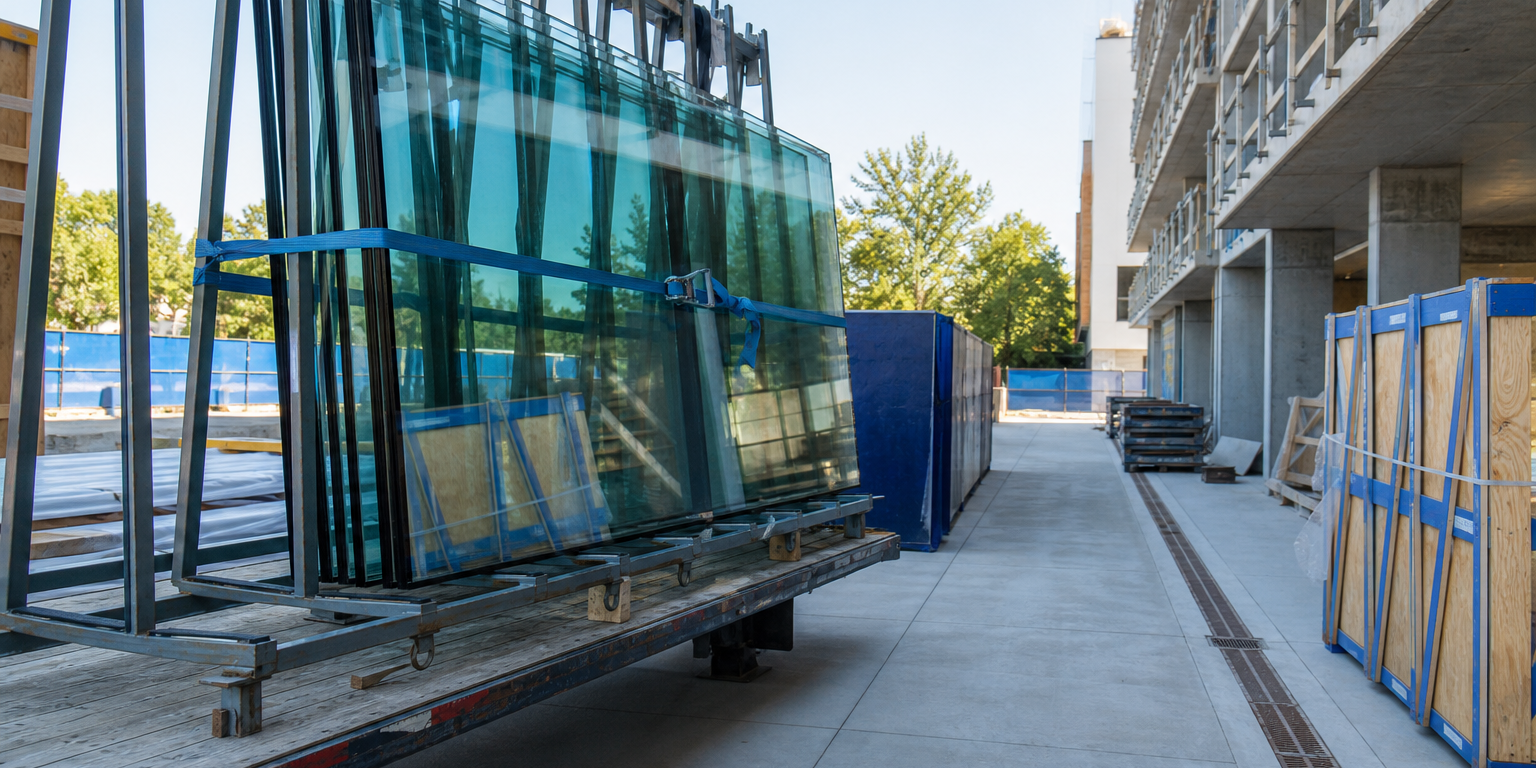
Commercial glass delivery requires more than a clear path to the building. Large lites, insulated glass units (IGUs), architectural glass, and related materials need coordinated packaging, a prepared receiving area, and a careful inspection before crews move them into staging or installation.
The best approach is to confirm shipment details before dispatch, assign a qualified receiver, and document the condition of every package at arrival. That process helps the project team identify visible damage, quantity discrepancies, or product mismatches while delivery records are available.
Use the checklist below to plan the delivery, receive materials methodically, and protect the information needed for follow-up.
Plan commercial glass delivery before the truck arrives
Start with the order documents. The person receiving materials should have the purchase order, approved shop drawings or product schedule, packing list, and the delivery contact information. Those records make it easier to compare what arrives with what the project requires.
Before scheduling, confirm the shipment scope and the jobsite conditions with the supplier and carrier. Important questions include:
- What is the expected delivery date, time window, and unloading responsibility?
- What package types, rack sizes, crate dimensions, or bundle weights should the site expect?
- What equipment is needed to unload and move the materials safely?
- Where can the truck enter, turn, park, and unload without blocking active work?
- Who has authority to inspect, note exceptions, and sign delivery paperwork?
- Which materials need to remain together, such as labeled lites, framing components, glass spacers, or door hardware?
Do not assume a standard forklift, crew size, or access route will suit every load. The equipment and handling plan should match the package dimensions, site layout, and manufacturer or supplier instructions. For broader staging guidance, review these jobsite preparation tips for glass delivery and installation.
Packaging and staging requirements for fragile materials
Packaging protects materials during transit, but it does not remove the need for careful unloading and storage. Keep each shipment in the orientation and configuration specified on its labels or accompanying instructions. Avoid removing restraints, protective edge materials, or identification tags until the team is ready to stage or install the material.
Prepare a clean, dry, controlled staging area before arrival. The space should keep glass away from vehicle traffic, welding or grinding activity, falling-object hazards, standing water, and areas where other trades may lean materials against the load.
Set up the receiving area
- Mark the unloading and staging zones before the truck reaches the site.
- Check that the route from truck to storage is clear, level where possible, and wide enough for the planned handling method.
- Keep racks or storage supports stable and suitable for the material being staged.
- Separate different elevations, opening locations, or finish requirements using the project’s labels and schedule.
- Keep protective materials in place until installation sequencing requires their removal.
- Limit access to the receiving zone while unloading and staging are underway.
Some products need added coordination. For example, Low-E glass may have a required coating orientation, and IGUs should remain identifiable by their unit labels. Fire-rated glass and related framing must also remain coordinated with the approved opening and system documents. A receiving inspection cannot replace submittal review or system verification.
Commercial glass delivery receiving checklist
Inspect the load before materials are dispersed around the site. If an issue is visible, photograph it before unloading when safe to do so. Follow the carrier’s procedures and the purchase terms when noting exceptions or reporting a concern.
1. Verify shipment identity and quantity
- Match the delivery address, purchase order, packing list, and project name.
- Count packages, crates, racks, and accessory cartons against the packing list.
- Confirm labels match the expected glass type, size, thickness, finish, and opening or elevation references where applicable.
- Check that associated materials, such as aluminum storefront systems, door hardware, or setting components, are accounted for when included in the shipment.
- Record shortages, overages, substitutions, or unlabeled materials before signing acceptance documents.
2. Inspect exterior packaging and supports
- Look for crushed corners, torn wrapping, broken bands, damaged crates, shifted loads, or wet packaging.
- Check racks, A-frames, and supports for visible deformation or instability.
- Look for exposed edges, loose materials, or signs that packages shifted during transit.
- Photograph any visible concern from several angles, including labels and the overall package.
3. Inspect accessible materials without creating a handling hazard
Do not dismantle packaging or move large glass solely to complete an inspection unless the handling plan supports that work. Inspect safely accessible surfaces for obvious chips, edge damage, scratches, breakage, seal concerns, coating damage, or contamination. Keep material identification visible so any finding can be tied to the correct package or lite.
For a large or complex order, document each package with a numbered photo set. Include a photo of the label, a full package view, and close-ups of any condition concern. This record helps the supplier, carrier, and project team discuss a specific item instead of a general description.
Document exceptions before the delivery record is closed
A clear delivery record protects the project schedule. If material appears damaged, incomplete, or inconsistent with the order, note the issue precisely on the carrier paperwork when appropriate. Use factual wording, such as “crate corner crushed,” “one carton not received,” or “label does not match packing list.” Avoid guessing at the cause or extent of damage.
Then notify the supplier using the order number, delivery date, package identifier, photos, and a concise description of the issue. Keep the affected material separated and identified until the responsible parties provide direction. Do not install material that appears damaged or does not match approved project requirements.
When ordering custom-cut glass, specialized coatings, or coordinated glazing materials, details provided before shipment matter. A complete custom quote request for commercial glass and storefront materials can help align product requirements, dimensions, quantities, and delivery needs before ordering.
Move from receiving to installation with a controlled handoff
Receiving is the handoff between transport and installation. Once the delivery is documented, update the installation team on the material location, labeling system, handling restrictions, and any open exceptions. Keep the packing list and inspection photos available to the superintendent, project manager, and glazing lead.
Before moving oversized panels again, confirm the route, equipment, crew roles, and placement sequence. Large glass handling should follow the product instructions, site safety plan, and the capabilities of the crew and equipment. These guidelines for handling oversized glass panels on job sites offer additional planning considerations.
Request materials and delivery coordination early
Commercial glass delivery works best when product selection, custom-cut requirements, packaging expectations, and jobsite access are discussed before the materials are ready to ship. Sky Building Materials supplies commercial glass, glazing materials, aluminum, doors, frames, and related hardware for construction projects, with nationwide delivery available. Request a custom quote with the project requirements and planned delivery details to support a more organized receiving process.