
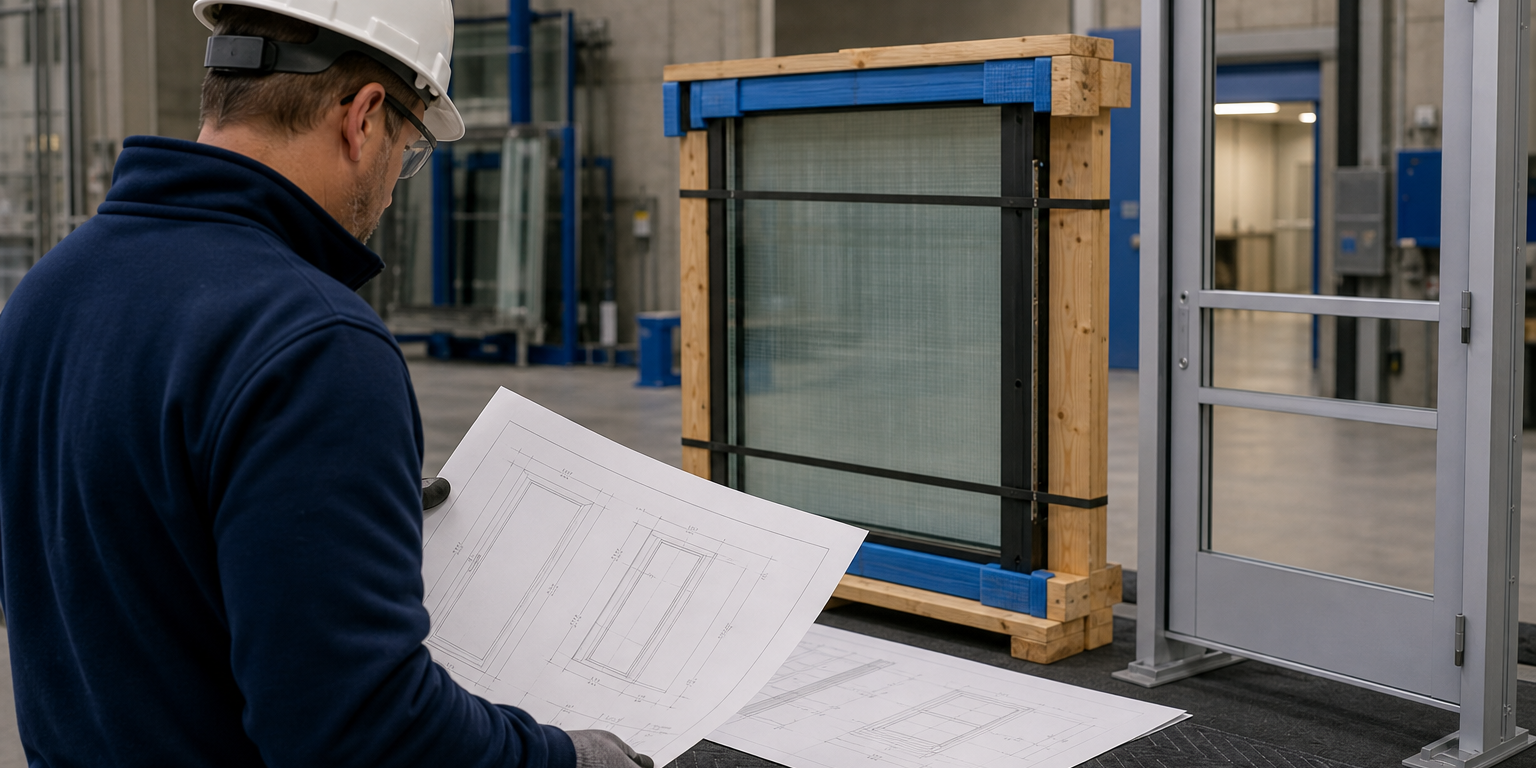
Can fire-rated glass be custom cut? Dimensions, ordering, and project considerations start with one essential distinction: fire-rated glass may be available in custom-cut finished sizes, but it should not be treated like ordinary glass that can be cut or altered at the jobsite. The approved product, its finished dimensions, glazing method, frame, and opening all need to work together.
For contractors, architects, and glazing professionals, the practical approach is to confirm the required opening and system first. Then request a custom quote for the specified fire-rated glass in the required finished size. This protects the intended fire rating and helps avoid material that cannot be installed as designed.
Why fire-rated glass is not a field-cut material
Fire-rated glass is used in openings that must meet defined fire-performance requirements. Its performance does not depend on the glass alone. The listed or approved assembly may also include the frame, glazing components, door or window configuration, hardware, and installation details.
Cutting after the product has been manufactured can change its edge condition, dimensions, and suitability for the intended opening. It may also conflict with the product’s required identification or the assembly documentation. For that reason, installers should not assume that a fire-rated lite can be trimmed to fit when the opening measures differently in the field.
Instead, treat the ordered size as a fabrication decision. Verify dimensions before release, including the required clearances and the glazing system’s documented requirements. If site conditions change, pause and confirm the appropriate path with the product and system information rather than modifying the glass.
Can fire-rated glass be custom cut? What “custom-cut” should mean
In a commercial glazing purchase, custom-cut should mean the glass is supplied in a specified finished size for a defined application. It does not mean every fire-rated product can be cut to any size, shape, or edge treatment.
Available dimensions depend on the product type and the rated application. A door vision lite, sidelite, transom, interior window, and borrowed-lite opening can each have different constraints. The required fire rating and the compatible framing system also affect the selection.
For projects considering glass ceramic, review KERALITE® SELECT fire-rated glass ceramic selection considerations before finalizing the glass schedule. That review should connect the requested size with the opening type, rating requirement, framing, and submittal needs.
Dimensions to confirm before requesting a quote
A complete dimension package reduces rework and makes a quote more useful. Do not send only a rough daylight opening or a photo when the opening is rated. Provide enough information to distinguish the glass size from the frame opening and finished sightline.
- Finished glass width and height: State the requested finished dimensions and whether they are nominal or exact.
- Quantity: Identify each lite count, including matching and nonmatching sizes.
- Opening type: Specify whether the glass is for a door, sidelite, transom, window, or another rated opening.
- Required fire rating: Share the rating called for in the drawings, schedule, or project requirements.
- Frame and glazing system: Identify the manufacturer or system details when available.
- Safety-glazing needs: Note if the location requires a safety option or if project documents call for one.
- Shape and special requirements: Flag nonrectangular shapes, holes, notches, cutouts, decorative requirements, or edge requests early.
- Project documentation: Include relevant specifications, elevations, door schedules, and detail references.
Dimension verification matters most at the interface between trades. Frame tolerances, door construction, glazing pocket dimensions, setting blocks, and gasket requirements can affect the final glass size. The glazing contractor should coordinate those details before fabrication.
Fire-protective and fire-resistive glazing are different decisions
Project teams should also avoid using “fire-rated” as the only selection criterion. Fire-protective and fire-resistive glazing serve different roles and may be evaluated differently within a building design. The applicable code requirements, opening location, and assembly requirements determine which approach is appropriate.
Ask the design professional or authority having jurisdiction when documentation leaves the required performance unclear. A supplier can help organize product and ordering information, but the project team should confirm the specified system and its compliance path.
The same coordination applies to doors. Glass, frame, door construction, and door hardware function as a package in a rated opening. For a broader overview, see fire-rated aluminum door considerations for commercial buildings.
Ordering checklist for custom-cut fire-rated glass
Before issuing a purchase order, align the following items with the approved project information:
- Confirm the opening location and required rating on the current drawings.
- Verify the finished glass dimensions against the actual frame or door preparation.
- Identify the fire-rated glass product and any required safety configuration.
- Confirm compatibility with the specified frame, glazing components, and opening type.
- Review required labels, markings, documentation, and submittal details.
- State quantity, delivery requirements, handling constraints, and site contact information.
- Obtain written confirmation before releasing custom-cut material for fabrication.
Lead time should be discussed early, especially when an opening includes unusual dimensions, project-specific documentation, or coordinated door and frame work. Accurate information at quote stage is more useful than a rushed order that needs later changes.
Handling and installation considerations
Custom sizing does not remove the need for careful receiving and installation. Inspect glass on delivery for the correct quantity, finished size, product identification, and visible shipping damage before it moves into the work sequence. Store and handle each lite according to the applicable product guidance.
During installation, use the specified glazing materials and follow the approved system details. Do not substitute gaskets, sealants, stops, or other components without confirming that the change is acceptable for the rated assembly. Do not drill, notch, polish, or otherwise alter fire-rated glass in the field unless the product documentation specifically permits that work.
Request a project-specific custom quote
Can fire-rated glass be custom cut? Often, it can be supplied in the finished dimensions needed for a defined rated opening. The right answer depends on the selected product, the required rating, the opening, and the compatible system—not on a field measurement alone.
Sky Building Materials supplies commercial glass and glazing materials for construction projects. Share the glass schedule, dimensions, opening type, rating requirement, and frame details to request a custom quote for KERALITE® SELECT fire-rated glass or other project needs. Early coordination can help your team order material that matches the intended opening and installation plan.