For contractors, fabricators, and design teams, choosing a glass supplier tulsa ok projects can depend on means more than finding a glass size. The supplier should help align commercial glass, insulated glass units (IGUs), aluminum framing, glazing materials, and hardware with the project documents and installation plan.
Sky Building Materials has a Tulsa, Oklahoma location and supplies materials for commercial construction projects. Its product scope includes commercial glass, architectural glass, Low-E glass, insulated glass units (IGUs), fire-rated glass, aluminum storefront systems, aluminum doors and frames, and related hardware. The company also provides custom-cut products, custom quotes, and nationwide delivery.
The right order starts with a clear understanding of the opening, the required performance, the supporting system, and the jobsite schedule. That preparation helps the project team request the correct materials before fabrication or installation begins.
What to expect from a glass supplier Tulsa OK construction teams can use
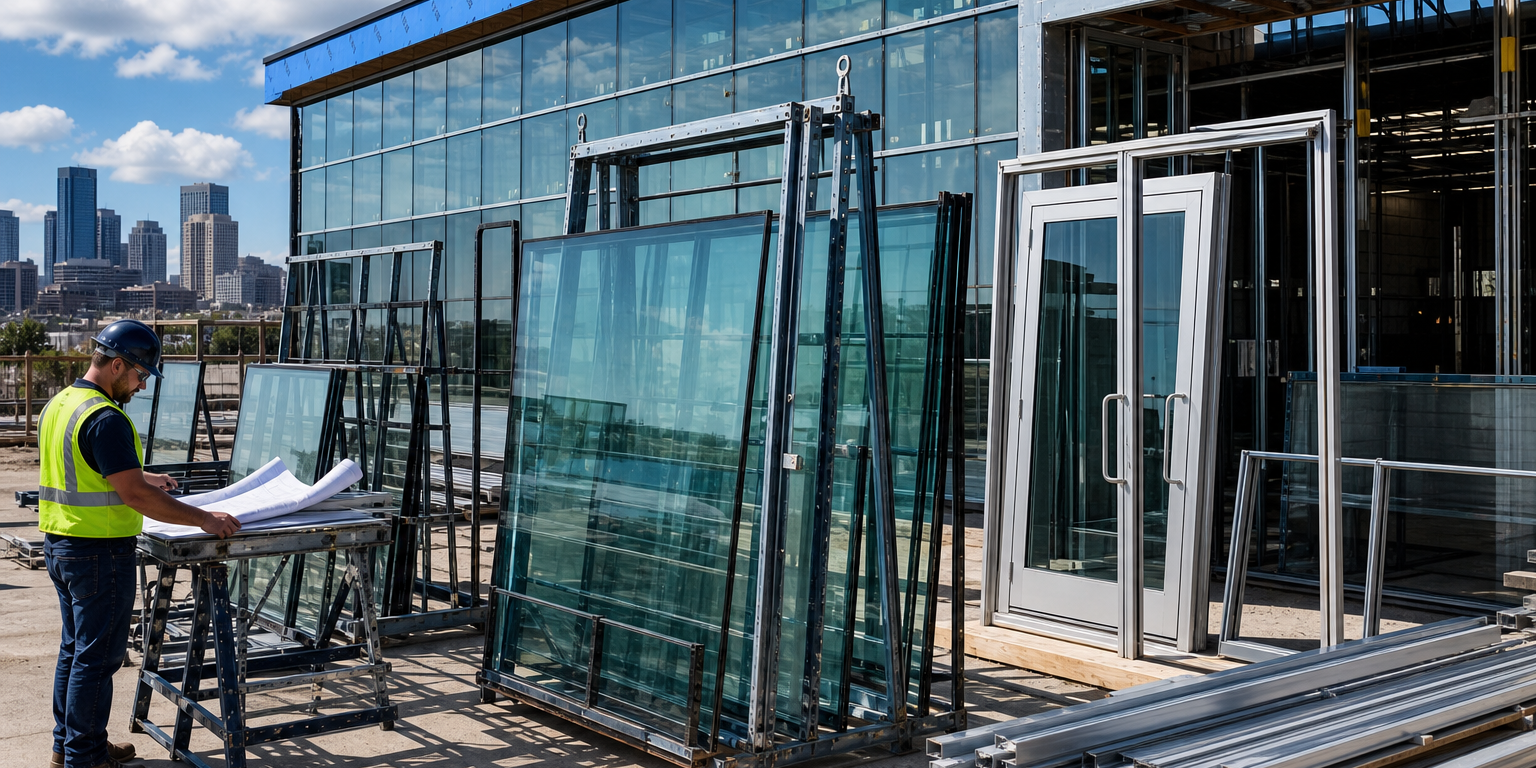
Commercial glazing scopes often combine several components. A storefront entry, for example, may require glass, aluminum framing, doors, glazing materials, and door hardware. A window package may call for architectural glass, specified coatings, glass spacers, and IGUs made for the intended application.
A productive supplier conversation should begin with the project’s actual requirements. Provide the information available in the drawings, specifications, schedules, and approved submittals. Avoid selecting a product only because it appears similar to one used on another job.
Core commercial glass and glazing materials
- Clear and architectural glass: Used where the design calls for visibility, daylight, appearance, or a specified glass build-up.
- Low-E glass: A coated glass option that project teams evaluate for solar control, thermal performance, appearance, and fabrication needs.
- Insulated glass units (IGUs): Multi-pane units used in many exterior glazing applications. Glass selection, spacer choice, seal design, frame system, and installation all affect the completed assembly.
- Laminated or safety glass: Options that may be relevant where the project documents require a particular safety, security, acoustic, or performance approach.
- Pattern glass and mirror glass: Materials that can support privacy, light diffusion, or interior design goals when specified for the application.
Glass thickness is not a stand-alone decision. Panel dimensions, support conditions, location, design loads, safety requirements, and the complete glazing system all matter. Review the project requirements before ordering. For a more focused framework, see commercial glass thickness selection for storefronts, doors, and partitions.
Specify IGUs and Low-E glass around project performance needs
Exterior glazing must work with the building envelope, the frame system, and the project’s performance targets. An IGU is not simply two panes of glass. Its make-up can include glass types, coatings, cavities, gas fills when specified, and glass spacers. Each decision can affect the unit’s intended performance and appearance.
Low-E glass requires the same level of coordination. Coating selection may relate to solar exposure, visible appearance, glazing orientation, energy objectives, safety glass requirements, and fabrication constraints. Teams should also identify coating surface placement and handling requirements before fabrication and installation.
When comparing glass options, ask these questions:
- What glass make-up is identified in the approved project documents?
- Does the exterior exposure create specific solar-control or thermal concerns?
- Is the glass part of an IGU, a storefront system, a door, or an interior partition?
- Are there appearance requirements for color, reflectance, privacy, or light transmission?
- What safety, performance, and fabrication requirements apply?
For more detail on evaluating coated glass, review how to choose Low-E glass for commercial construction projects. When the choice is between an insulated assembly and laminated glass, the intended function matters just as much as the visual result. See the guide to insulated glass versus laminated glass for commercial projects.
Coordinate fire-rated glass as a complete listed system
Fire-rated openings require careful coordination. Fire-rated glass should not be treated as an interchangeable pane that can be placed into any frame or door. The opening’s required rating, application, glass classification, frame or door, glazing materials, and hardware must align with the applicable listed system and project requirements.
Project teams may need to distinguish between fire-protective and fire-resistive products. Those classifications are not substitutes for one another. The required wall assembly and opening condition drive the selection. KERALITE® SELECT fire-rated glass ceramic is one product option to evaluate when its documented characteristics and compatible system requirements match the specified opening.
Before requesting pricing or ordering, confirm the opening type, required rating, system documentation, dimensions, compatible components, and submittal status. The guide to listed-system compatibility for fire-rated glass, frames, and glazing materials explains why the full assembly matters.
Consider aluminum storefront systems, doors, and hardware together
Aluminum storefront systems require more than glass and extrusions. A finished entrance or storefront can involve aluminum doors and frames, glazing gaskets or other glazing materials, anchors, thresholds, pivots or hinges, closers, pulls, locks, and related door hardware.
Coordinate these components early, especially where the project includes custom sizes, multiple entrance conditions, or specified finish and hardware functions. Door handing, swing, accessibility requirements, locking needs, glass type, and frame compatibility can affect the material package.
The same approach applies to interior applications. Shower hardware, partition hardware, and door hardware should be matched to the glass configuration and the intended use. Installation teams should verify field dimensions and conditions before releasing custom-cut materials for fabrication.
Prepare a complete request for a custom quote
A complete request gives a supplier the information needed to evaluate the material scope. It also reduces back-and-forth that can delay purchasing decisions. For a commercial glass package, include as much of the following as is available:
- Project name, jobsite location, and requested delivery timing
- Drawings, specifications, elevations, door schedules, and glazing schedules
- Glass type, thickness, dimensions, quantities, and required fabrication details
- IGU make-up, Low-E coating, glass spacers, or other specified components
- Storefront, entrance, aluminum doors and frames, and hardware requirements
- Fire-rated opening details and listed-system documentation, where applicable
- Delivery constraints, unloading plan, and a jobsite contact
Sky Building Materials can provide a custom quote for commercial glass, glazing materials, and related aluminum and hardware products. Because the company provides nationwide delivery, teams should also plan receiving, staging, and inspection for large or fragile materials. Use the commercial glass delivery and jobsite inspection checklist to prepare for that step.
Source commercial glazing materials with the whole project in view
The best glass supplier tulsa ok decision supports the full construction sequence: document review, product selection, fabrication, delivery, receiving, and installation. Bring the glass, framing, fire-rated, and hardware requirements together before materials are released.
For a Tulsa commercial project, contact Sky Building Materials with the available drawings, specifications, quantities, and schedule. A detailed custom quote request creates a stronger starting point for selecting commercial glass and glazing materials that fit the job.