Low-E glass has become one of the most important materials in modern building design. It improves energy efficiency, reduces heat transfer, and helps buildings maintain comfortable interior temperatures year-round.
Because of these benefits, Low-E coated glass is widely used in insulated glass units (IG units), commercial storefront systems, office buildings, and residential windows.
However, one critical factor that fabricators and glazing contractors must understand is sealant compatibility. Not all sealants interact with Low-E coatings the same way. If the wrong sealant is used, it can damage the coating, weaken the seal, or reduce the long-term performance of the glass unit.
Understanding how Low-E glass works with sealants helps fabricators avoid production issues and ensure reliable glass performance once installed.
What Is Low-E Glass?
Low-E stands for “low emissivity.” It refers to a microscopic coating applied to glass that reflects heat while still allowing visible light to pass through.
This coating helps control heat transfer through the glass, which improves the energy efficiency of a building.
Low-E glass works by reflecting infrared heat energy. In warm climates, it reflects heat away from the building. In cooler climates, it helps retain interior heat.
Because of these properties, Low-E coatings are commonly used in:
- Insulated glass units (IG units)
- Commercial storefront glazing
- Office buildings
- Residential window systems
- Curtain wall systems
These coatings are extremely thin and delicate, which is why compatibility with sealants and adhesives is so important during fabrication.
Why Sealant Compatibility Matters
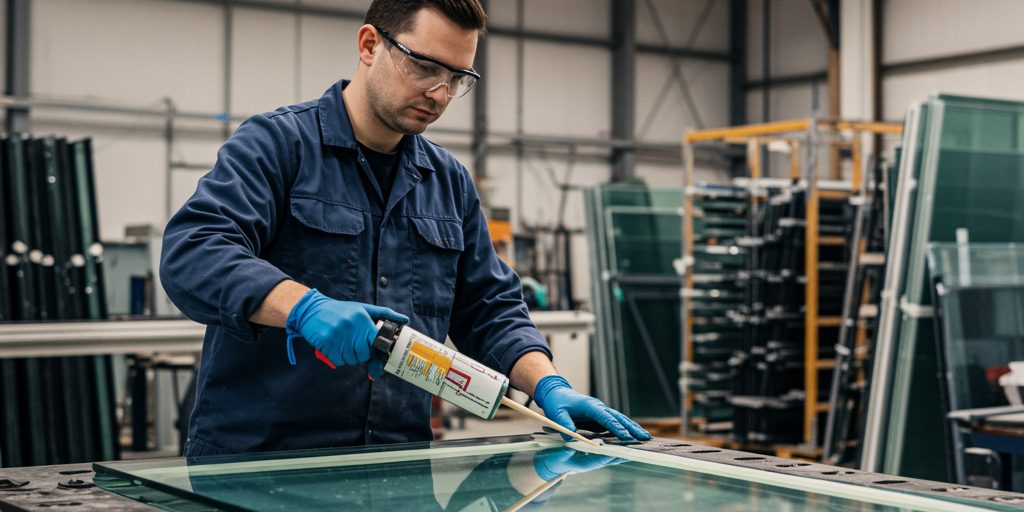
Sealants play a critical role in insulated glass construction. They hold the glass panes together, seal the spacer system, and protect the interior cavity of the IG unit from moisture.
When sealants interact incorrectly with Low-E coatings, several problems can occur.
Potential issues include:
- Seal failure over time
- Coating damage
- Chemical reactions that weaken adhesion
- Reduced insulating performance
- Moisture intrusion between glass panes
If sealants fail or degrade, the insulated glass unit may develop condensation or fogging inside the cavity. Once that happens, the unit usually needs to be replaced.
For this reason, manufacturers test sealants and coatings together to ensure compatibility before production.
Understanding Soft-Coat vs Hard-Coat Low-E Glass
Low-E glass typically comes in two main types: soft-coat and hard-coat.
Each type interacts differently with sealants and fabrication processes.
Hard-Coat Low-E Glass
Hard-coat Low-E glass is produced during the float glass manufacturing process. The coating becomes bonded to the glass surface while the glass is still hot.
This process creates a durable coating that can handle more direct contact during fabrication.
Hard-coat Low-E glass:
- Is more durable during handling
- Can sometimes be used in single-pane applications
- Offers moderate energy efficiency improvements
Because the coating is stronger, sealant compatibility concerns are usually less severe than with soft-coat glass.
Soft-Coat Low-E Glass
Soft-coat Low-E glass is applied in a vacuum chamber after the glass has been manufactured. This coating creates higher energy efficiency but is much more delicate.
Soft-coat Low-E glass:
- Provides better thermal performance
- Requires insulated glass construction
- Must be protected inside the IG unit
- Is more sensitive to fabrication materials
Because the coating is fragile, sealants must be carefully selected to avoid chemical reactions or adhesion problems.
Common Sealants Used in IG Units
Insulated glass fabrication typically uses two primary types of sealants.
These sealants form the primary and secondary seals that protect the IG unit cavity.
Polyisobutylene (PIB)
PIB is often used as the primary seal in insulated glass units. It provides strong moisture resistance and gas retention.
This sealant helps prevent moisture from entering the cavity between glass panes.
Silicone or Polysulfide Sealants
The secondary seal provides structural strength to the IG unit. Silicone and polysulfide sealants are commonly used for this purpose.
These sealants help hold the glass panes together and protect the spacer system.
However, compatibility between these sealants and Low-E coatings must always be verified before production.
How Sealants Can Affect Low-E Coatings
Low-E coatings are extremely thin. They are measured in microscopic layers and can be damaged by chemical reactions or poor adhesion.
Sealants can affect Low-E coatings in several ways.
Chemical Interaction
Some sealant components may react with the metallic coating layers on Low-E glass. This can cause discoloration, coating breakdown, or loss of adhesion.
Adhesion Failure
If the sealant cannot properly bond to the glass surface near the coating, the seal may weaken over time.
Contamination During Fabrication
Improper handling during fabrication can allow sealants to contact the coated surface where they should not be applied.
These issues can reduce the lifespan of the insulated glass unit.
Best Practices for Fabricators Working with Low-E Glass
Fabricators can reduce compatibility problems by following a few key best practices.
Verify Manufacturer Compatibility
Glass manufacturers often publish compatibility charts that list approved sealants for specific Low-E coatings.
Always confirm sealant compatibility before starting production.
Protect the Coated Surface
Soft-coat Low-E glass should be positioned inside the insulated glass unit so the coating remains protected.
This prevents exposure to environmental conditions and fabrication materials.
Maintain Clean Fabrication Conditions
Dust, oils, and contaminants can interfere with sealant adhesion.
Fabrication areas should remain clean, and glass should be handled with proper gloves and equipment.
Follow Recommended Edge Deletion Procedures
Edge deletion removes the Low-E coating around the perimeter of the glass pane. This allows sealants to bond directly to the glass surface rather than the coating.
This process improves long-term adhesion and helps prevent seal failure.
The Importance of Quality Materials in Glass Fabrication
Glass fabrication involves multiple materials working together. Sealants, spacers, coatings, and glass must all be compatible to create a reliable insulated glass unit.
When materials are selected correctly, IG units can last for decades without performance issues.
However, if compatibility is overlooked, even small problems during fabrication can lead to premature seal failure.
Working with experienced suppliers and manufacturers helps ensure materials meet performance standards for commercial glazing systems.
Supporting Contractors and Fabricators with Reliable Materials
Glazing contractors, window manufacturers, and glass fabricators rely on dependable materials to complete projects efficiently.
Reliable supply chains and quality materials help prevent delays while ensuring glass systems perform as expected once installed.
For professionals working across Texas, Oklahoma, Louisiana, New Mexico, Arkansas, Missouri, and Kansas, access to trusted glass and storefront materials is essential.
Conclusion
Low-E glass has become a key component of energy-efficient building design. Its ability to control heat transfer helps improve building performance and reduce energy costs.
However, Low-E coatings require careful handling during fabrication, especially when sealants are involved. Ensuring compatibility between coatings and sealants helps protect insulated glass units from seal failure and long-term performance issues.
Sky Building Materials supplies glass products, insulated glass units, aluminum storefront materials, and glazing components for contractors and fabricators across the region.
With locations in Dallas at 10835 Shady Trail, Dallas, Texas 75220, Houston at 4600 S Pinemont Drive, Houston, TX 77041, and a new location in Tulsa, Oklahoma, Sky Building Materials supports professionals with dependable construction materials for commercial and architectural projects.
To learn more about available glass products and fabrication materials, visit the Sky Building Materials Contact Page:
https://skybuildingmaterials.com/contact/
You can also follow product updates and industry insights on the Sky Building Materials Facebook Page.