
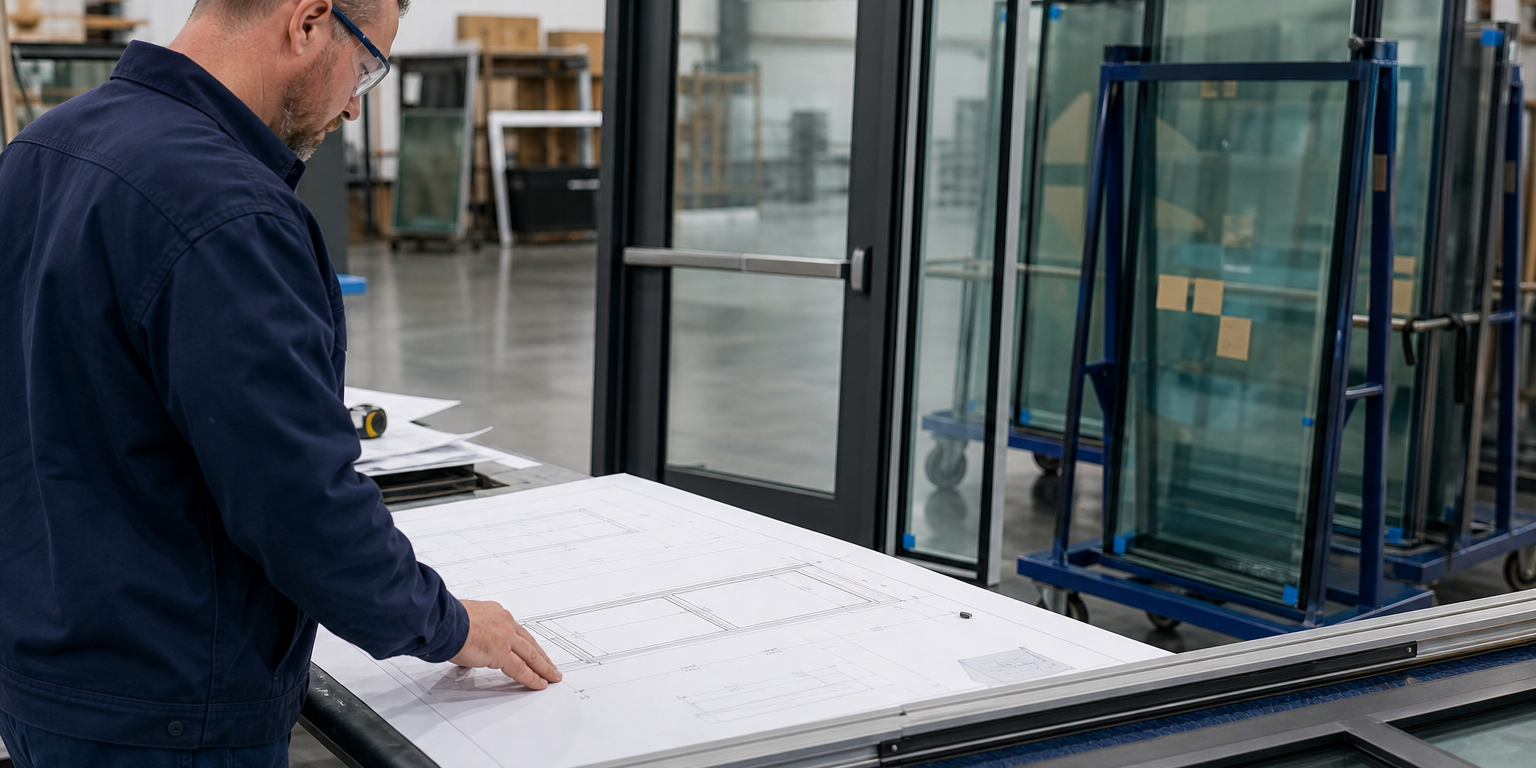
Yes, custom-cut fire-rated glass can often be supplied in project-specific finished sizes. However, it is not a material that should be treated like ordinary glass in the field. The required fire rating, glass classification, frame, glazing components, safety needs, and manufacturer listing all affect whether a requested size is available and acceptable for the opening.
For contractors, glaziers, architects, and fabricators, the most reliable approach is to define the complete rated opening before placing an order. That means confirming more than width and height. The glass must work as part of the tested or listed door, frame, window, sidelite, or transom assembly.
What “custom-cut” means for fire-rated glass
In fire-rated applications, custom-cut usually means the supplier provides glass to the requested finished dimensions during production or through an approved fabrication process. It does not automatically mean that installers can trim the glass after delivery or cut it on site.
Fire-rated glass products have specific fabrication rules. Cutting, drilling, edge work, or other changes after a product has been made can affect its intended performance, labeling, or eligibility for use in a rated opening. The correct process depends on the particular product and its listing.
For that reason, submit final dimensions before ordering whenever possible. Do not assume a slightly oversized lite can be reduced later to solve an installation issue.
Custom-cut fire-rated glass dimensions depend on the complete system
There is no universal maximum size for custom-cut fire-rated glass. Available dimensions can vary by glass type, thickness, fire-rating requirement, opening configuration, frame, and the applicable tested or listed system.
Start by identifying the opening type and project requirement. A vision lite in a rated door may have different constraints than a sidelite, interior window, borrowed-lite assembly, or transom. Even when two openings appear similar, their rating and compatible components may differ.
Information that affects available glass sizes
- Required fire rating: Confirm the rating identified on the drawings, door schedule, specifications, or approved project documents.
- Fire-protective or fire-resistive classification: These categories address different performance characteristics and may suit different applications. Review the difference between fire-protective and fire-resistive glass before treating them as interchangeable.
- Opening configuration: Identify whether the glass is for a door lite, sidelite, transom, window, wall opening, or another rated assembly.
- Frame and glazing system: The frame, glazing beads, gaskets, setting blocks, and other components must be compatible with the selected glass and opening.
- Safety glazing needs: The location may call for a safety-rated configuration in addition to fire performance.
- Visible versus overall glass dimensions: A drawing may show sightline dimensions rather than the finished glass size needed for fabrication.
- Shape and edge details: Nonrectangular lites, cutouts, holes, and special edge requirements need early review. Do not presume they are available.
Measure for finished size, not rough opening size
A common ordering problem begins with using a rough opening size as the glass size. Glass fabricators need the finished dimensions that account for the frame pocket, required clearances, edge cover, setting method, and approved glazing details.
Use the system documentation and shop drawings to determine the correct glass dimensions. If final field dimensions are not available, clearly identify preliminary measurements as preliminary. This gives the project team a chance to avoid ordering glass that does not fit the completed opening.
Also provide dimensions in a consistent format, such as width by height, and state the unit of measure. Mark each lite with an opening identification that matches the drawings or door schedule. Clear identification is especially important when several rated openings have similar sizes.
Confirm code, listing, and assembly compatibility before ordering
Glass alone does not create a rated opening. The rating applies to an assembly with specific components and installation conditions. A correct piece of fire-rated glass can still be unsuitable if it is placed in an incompatible frame or used beyond the limits of the applicable system.
Before requesting pricing or releasing an order, coordinate the selected glass with the door manufacturer, frame supplier, glazing contractor, architect, and other responsible project parties. Project documents and the authority having jurisdiction guide the final compliance decision.
A practical selection process starts with the required rating and opening type, then verifies compatible components and documentation. For more detail, see how to select fire-rated glass for applicable building-code requirements.
Questions to resolve during coordination
- What fire rating does the opening require?
- Is the specified glass fire-protective or fire-resistive?
- Which frame, door, and glazing system will receive the glass?
- Does the proposed lite size fall within the permitted limits for that system?
- Are safety glazing, impact, smoke, security, acoustic, or appearance requirements involved?
- What labels, documentation, and submittals does the project require?
Ordering requirements for custom-cut fire-rated glass
A complete quote request shortens the clarification cycle and makes it easier to compare the requested material against the opening requirements. Include enough information for the supplier to identify the glass and the system context.
At a minimum, send the finished glass size, quantity, opening type, required rating, and relevant drawing or schedule reference. Include the frame or door information when available. If the project calls for a particular glass product, safety configuration, tint, finish, or other feature, identify it directly rather than relying on a general description.
For example, KERALITE® SELECT is a fire-rated glass ceramic product intended for rated commercial openings. Its suitability still depends on the required rating, opening type, compatible framing, and project documentation. Review KERALITE® SELECT product-selection considerations as part of the selection process.
Provide the following with a custom quote request:
- Project name and delivery location
- Contact information and requested delivery timing
- Glass quantity and finished width-by-height dimensions for each lite
- Required fire rating and glass classification, if specified
- Opening IDs, door schedule references, or marked drawings
- Frame, door, and glazing-system details
- Any safety or special performance requirements
- Whether dimensions are confirmed field dimensions or subject to verification
Sky Building Materials can help buyers organize the information needed for a custom quote for commercial glass and fire-rated materials. Supplying complete project details helps the team evaluate availability and ordering requirements accurately.
Project considerations that prevent costly changes
Custom dimensions often affect more than fabrication. They can influence lead time, handling, crating, delivery coordination, and installation sequencing. Large or unusually shaped lites may also require additional planning for access, lifting, staging, and protection on site.
Keep revisions controlled once dimensions are released. If the frame layout, opening location, or door schedule changes, review the glass schedule before material moves into fabrication. A small drawing revision can change a finished lite size or alter the required system.
Finally, protect delivered glass from damage and keep labels and identifying information with the material until installation. The glazing crew should install the glass only in accordance with the applicable system requirements and project documentation.
Plan custom sizes early and verify every component
Custom-cut fire-rated glass is a practical option when the requested dimensions align with an appropriate rated system. The key is to treat the glass as one component of a complete assembly, not as an isolated sheet product.
Confirm the rating, opening type, finished dimensions, framing, glazing method, and documentation before ordering. For project-specific material and availability, request a custom quote from Sky Building Materials with the relevant drawings and opening details.