
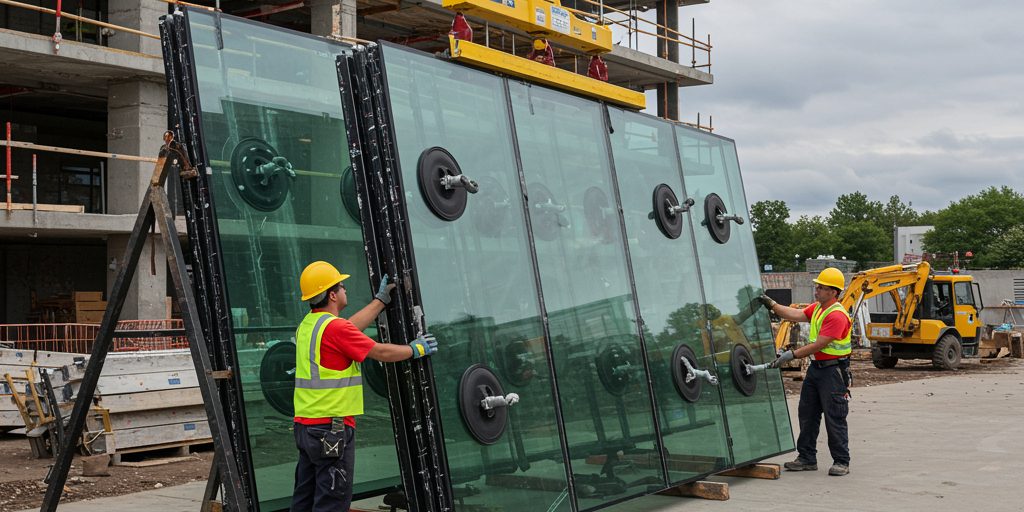
Insulated glass units (IG units) are a key component of modern commercial construction. These units help control heat transfer, improve energy efficiency, and provide clear visibility in storefront systems, windows, and curtain walls.
Because IG units consist of multiple panes of glass sealed together with spacers and insulating gas, they require careful handling and storage before installation. Even small mistakes during transportation or jobsite storage can lead to seal failure, glass breakage, or long-term performance issues.
For glazing contractors and general contractors, following proper handling procedures helps protect materials, reduce costly replacements, and keep projects on schedule.
This contractor checklist outlines best practices for handling and storing insulated glass units safely before installation.
Why Proper Handling of IG Units Matters
Insulated glass units are engineered products designed to perform for many years once installed. However, they remain vulnerable to damage before they are placed in their final framing system.
Common issues caused by improper handling include:
- Edge damage to glass panes
- Broken seals around spacers
- Surface scratches or coating damage
- Glass breakage from impact or pressure
- Moisture intrusion that affects insulation performance
Damage that occurs before installation can compromise the entire glass unit. In many cases, the only solution is replacing the unit, which can delay construction schedules and increase costs.
Following proper handling procedures helps protect both the materials and the project timeline.
Inspect Glass Deliveries Immediately
The first step in protecting insulated glass units begins when materials arrive at the jobsite.
Contractors should inspect glass shipments as soon as they are delivered.
This inspection should include checking:
- Shipping crates for damage
- Broken packaging or protective materials
- Visible cracks or chips in the glass
- Signs of moisture inside units
- Misaligned spacers or damaged seals
If damage is discovered during delivery, it should be documented immediately and reported to the supplier.
Early inspection helps avoid confusion later about when damage occurred.
Keep Glass Units Vertical During Storage
Insulated glass units should always be stored vertically rather than lying flat.
When glass is placed horizontally, the weight of the glass can create uneven pressure across the panes. Over time, this pressure may lead to cracking or seal stress.
Storing glass vertically helps distribute weight evenly along the edges.
Best practices for vertical storage include:
- Placing glass on padded racks or A-frames
- Using rubber or foam supports to protect edges
- Keeping units slightly tilted for stability
Proper vertical storage helps prevent unnecessary stress on the glass.
Protect Glass Edges from Damage
The edges of insulated glass units are particularly vulnerable during handling. Even small chips or cracks near the edge can cause the glass to fail later.
Edge damage often occurs when glass is placed on hard surfaces or bumped against other materials during movement.
To protect glass edges:
- Always use padded supports when storing glass
- Avoid placing glass directly on concrete floors
- Keep glass separated with protective spacers
- Move glass carefully when unloading shipments
Protecting the edges of the glass is one of the most important steps in preventing breakage.
Avoid Storing Glass in Direct Sunlight
Direct sunlight can create uneven temperature changes in insulated glass units. When one side of the glass heats faster than the other, thermal stress can develop.
Over time, this stress may cause glass breakage or seal damage.
Whenever possible, IG units should be stored in shaded or covered areas before installation.
Indoor storage areas are ideal because they protect glass from:
- Direct sunlight
- Rain and moisture
- Temperature fluctuations
- Wind and debris
If indoor storage is not available, contractors should use protective coverings to shield glass from sunlight and weather exposure.
Maintain a Clean Storage Area
Dust, debris, and jobsite contaminants can damage glass surfaces during storage.
A clean storage area helps prevent scratches and coating damage.
Contractors should ensure that storage areas are:
- Free of construction debris
- Protected from heavy equipment traffic
- Clear of materials that could fall against the glass
- Organized to allow safe movement around stored units
Maintaining a clean environment helps protect glass surfaces and coatings before installation.
Use Proper Lifting Equipment
Insulated glass units can be heavy and difficult to move safely without the proper equipment.
Improper lifting methods increase the risk of dropping glass or damaging edges.
Depending on the size and weight of the glass, contractors may use:
- Glass suction lifters
- Mechanical lifting equipment
- Glass dollies or carts
- Multiple workers for large panels
Workers should always follow safe lifting practices and avoid placing pressure directly on glass edges.
Using the right equipment protects both the glass and the installation crew.
Prevent Seal Damage During Handling
The seals around insulated glass units protect the internal cavity that provides insulation performance.
Rough handling or pressure on the edges can weaken these seals.
If seals become damaged, moisture may enter the glass cavity, which can lead to fogging between the panes.
To protect seals during handling:
- Avoid gripping the glass directly along the seal edge
- Lift units using suction tools or proper supports
- Do not stack glass units tightly against each other
- Move units slowly and carefully during transport
Protecting the seal ensures the insulated glass unit will perform as intended after installation.
Follow Manufacturer Storage Guidelines
Glass manufacturers often provide specific instructions for storing and handling insulated glass units.
These guidelines may include recommendations for:
- Maximum storage time before installation
- Temperature ranges for storage environments
- Recommended spacing between units
- Proper rack or frame types
Contractors should always review manufacturer recommendations before storing glass materials.
Following these guidelines helps protect warranties and ensures proper glass performance.
Prepare Glass Carefully Before Installation
Before installing insulated glass units, contractors should perform a final inspection.
This step helps identify any damage that may have occurred during storage or handling.
The inspection should include checking:
- Glass surfaces for scratches or defects
- Edge condition and seal integrity
- Spacer alignment within the unit
- Moisture or fogging between panes
If problems are identified before installation, they can be addressed before the glass becomes part of the building envelope.
This final check helps avoid costly replacements after installation.
Reliable Materials Support Successful Installations
Handling and storage procedures are important, but material quality also plays a major role in glass performance.
Contractors depend on reliable suppliers who provide insulated glass units, storefront materials, and glazing components that meet industry standards.
High-quality materials combined with proper handling practices help ensure successful glass installations that perform reliably for years.
For professionals working across Texas, Oklahoma, Louisiana, New Mexico, Arkansas, Missouri, and Kansas, dependable access to glass materials is a key part of completing projects efficiently.
Conclusion
Insulated glass units provide important energy performance and visual clarity in modern buildings. However, these systems require careful handling before installation to maintain their integrity.
Following a simple checklist for inspection, storage, and handling helps prevent edge damage, seal failure, and glass breakage.
By storing IG units vertically, protecting edges, avoiding temperature stress, and using proper lifting equipment, contractors can ensure that glass systems perform as intended once installed.
Sky Building Materials supplies insulated glass units, patterned glass, laminated glass, aluminum storefront materials, and commercial door hardware for glazing contractors and fabricators throughout the region.
With locations in Dallas at 10835 Shady Trail, Dallas, Texas 75220, Houston at 4600 S Pinemont Drive, Houston, TX 77041, and a new location in Tulsa, Oklahoma, Sky Building Materials helps professionals source dependable materials for commercial construction projects.
To learn more about available glass products and storefront materials, visit the Sky Building Materials Contact Page:
https://skybuildingmaterials.com/contact/
You can also stay connected with industry updates and product highlights on the Sky Building Materials Facebook Page.