Glass plays a major role in modern construction. From storefront systems to office buildings and residential windows, glass allows natural light to enter buildings while maintaining visibility and architectural style.
But not all glass performs the same. Different types of glass offer different levels of strength and safety, and building codes often require specific glass types depending on where the glass is installed.
For glazing contractors, general contractors, and window fabricators, understanding glass strength and safety ratings helps ensure projects meet code requirements while maintaining long-term durability.
Knowing when to use tempered glass, laminated glass, or insulated glass units (IG units) can make the difference between a safe installation and a costly replacement.
Why Glass Strength Matters in Construction
Glass must handle a variety of stresses in commercial and residential buildings.
These stresses include:
- Wind pressure on building exteriors
- Impact from objects or debris
- Temperature expansion and contraction
- Structural movement in buildings
- Human contact in high-traffic areas
Standard annealed glass can break easily under stress. When it breaks, it often forms large sharp shards that can cause serious injuries.
Because of this risk, building codes require stronger safety glass in many locations.
Stronger glass types help protect occupants while also improving durability in commercial construction.
What Are Glass Safety Ratings?
Glass safety ratings are performance standards that measure how glass behaves under impact and stress.
These ratings help determine whether the glass meets building safety requirements.
In the United States, safety glass is typically evaluated using standards from organizations such as:
- ANSI (American National Standards Institute)
- CPSC (Consumer Product Safety Commission)
- ASTM (American Society for Testing and Materials)
These standards test how glass performs when struck by objects, exposed to pressure, or subjected to temperature changes.
Glass that meets safety standards receives certification indicating that it can be used in specific construction applications.
Annealed Glass: The Basic Glass Type
Annealed glass is the most basic type of architectural glass. It is produced through the standard float glass manufacturing process.
While annealed glass is suitable for some applications, it does not qualify as safety glass.
When annealed glass breaks, it forms large, sharp pieces that can cause injuries.
Because of this risk, building codes restrict where annealed glass can be used. It is often limited to areas where human impact is unlikely.
Examples may include:
- Decorative interior applications
- High window locations
- Protected glazing areas
Most commercial storefront systems require stronger safety glass instead.
Tempered Glass: Increased Strength and Safety
Tempered glass is one of the most commonly used safety glass types in construction.
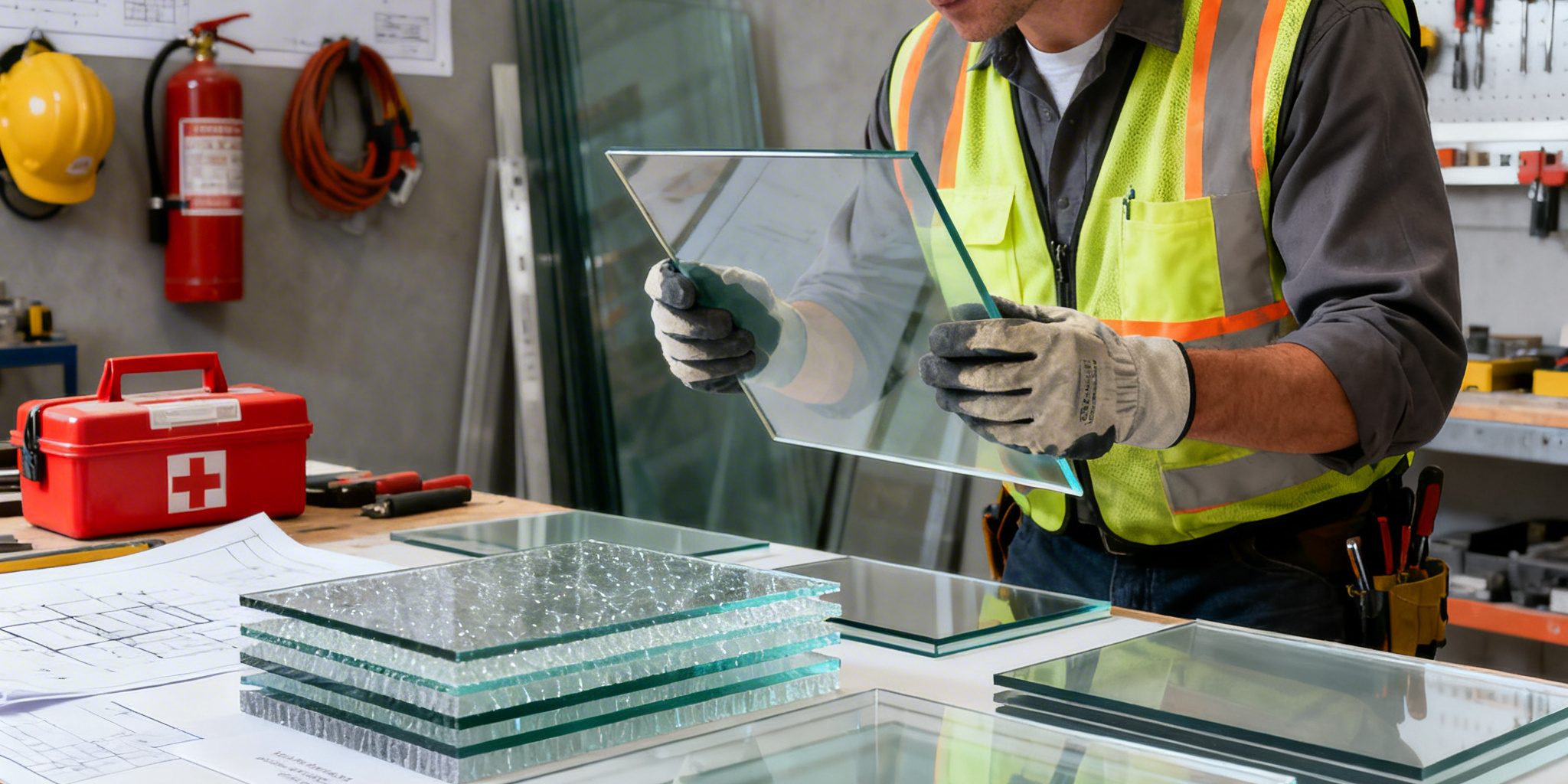
It is created by heating glass to very high temperatures and then rapidly cooling it. This process strengthens the glass and changes how it breaks.
Tempered glass is typically four to five times stronger than standard annealed glass.
When tempered glass breaks, it shatters into many small, blunt pieces rather than large sharp shards. This reduces the risk of serious injury.
Tempered glass is commonly used in:
- Storefront doors and entryways
- Glass walls and partitions
- Shower doors
- Commercial windows
- Glass railings
Because of its strength and safety characteristics, tempered glass is often required in high-traffic areas.
Laminated Glass: Added Protection and Security
Laminated glass is another important safety glass option.
It is made by bonding two or more layers of glass together with a plastic interlayer, usually made from polyvinyl butyral (PVB).
This interlayer holds the glass pieces together if the glass breaks.
Instead of shattering into pieces, laminated glass cracks but remains in place. This prevents glass from falling or creating dangerous openings.
Laminated glass is commonly used in applications where additional protection is needed.
Examples include:
- Hurricane-resistant windows
- Security glass systems
- Skylights
- Curtain wall systems
- Glass railings
Laminated glass also provides additional sound reduction and UV protection.
Insulated Glass Units and Safety Requirements
Insulated glass units (IG units) combine multiple panes of glass separated by a spacer and sealed together to improve thermal performance.
IG units often include tempered or laminated glass to meet safety requirements.
For example:
- A storefront IG unit may use tempered glass on the exterior pane
- Laminated glass may be used on interior panes for added safety
- Low-E coatings may be applied to improve energy efficiency
Combining safety glass with insulated units allows buildings to achieve both performance and code compliance.
Building Codes and Glass Safety Requirements
Building codes determine where safety glass must be used in construction.
These codes are designed to protect people from injury in areas where glass may be impacted.
Common areas where safety glass is required include:
- Doors and entrance systems
- Windows near doors
- Glass panels near walking paths
- Large glass panels close to the floor
- Shower enclosures
Because building codes vary by location, contractors should always verify requirements with local authorities or project specifications.
For projects across Texas, Oklahoma, Louisiana, New Mexico, Arkansas, Missouri, and Kansas, safety glass standards typically follow the International Building Code (IBC).
How Contractors Choose the Right Glass Type
Selecting the correct glass type involves balancing several factors.
Contractors often consider:
- Building code requirements
- Glass strength needs
- Energy efficiency goals
- Security considerations
- Project budget
For example, a storefront system may require tempered glass for safety, while laminated glass may be chosen for additional security or sound reduction.
Working with experienced glass suppliers can help contractors select the right materials for each project.
Why Quality Glass Supply Matters
Even the strongest glass systems depend on proper fabrication and reliable material supply.
Low-quality glass products or fabrication errors can lead to issues such as:
- Improper tempering
- Coating damage
- Seal failures in insulated glass units
- Incorrect glass thickness
Reliable suppliers help ensure that glass products meet safety standards and project specifications.
For glazing contractors and builders, dependable glass supply helps keep projects on schedule while maintaining construction quality.
Conclusion
Glass strength and safety ratings play a critical role in modern construction. Understanding the differences between annealed, tempered, laminated, and insulated glass helps contractors choose the right materials for each project.
Stronger safety glass options protect building occupants, improve durability, and ensure compliance with building codes.
Sky Building Materials supplies glass products, insulated glass units, aluminum storefront systems, and commercial door hardware for contractors and fabricators across the region.
With locations in Dallas at 10835 Shady Trail, Dallas, Texas 75220, Houston at 4600 S Pinemont Drive, Houston, TX 77041, and a growing presence in Tulsa, Oklahoma, Sky Building Materials supports professionals with dependable materials for commercial glazing and construction projects.
To learn more about available glass products and storefront materials, visit the Sky Building Materials Contact Page:
https://skybuildingmaterials.com/contact/
You can also follow product updates and industry insights on the Sky Building Materials Facebook Page.